What is Atrial Fibrillation?
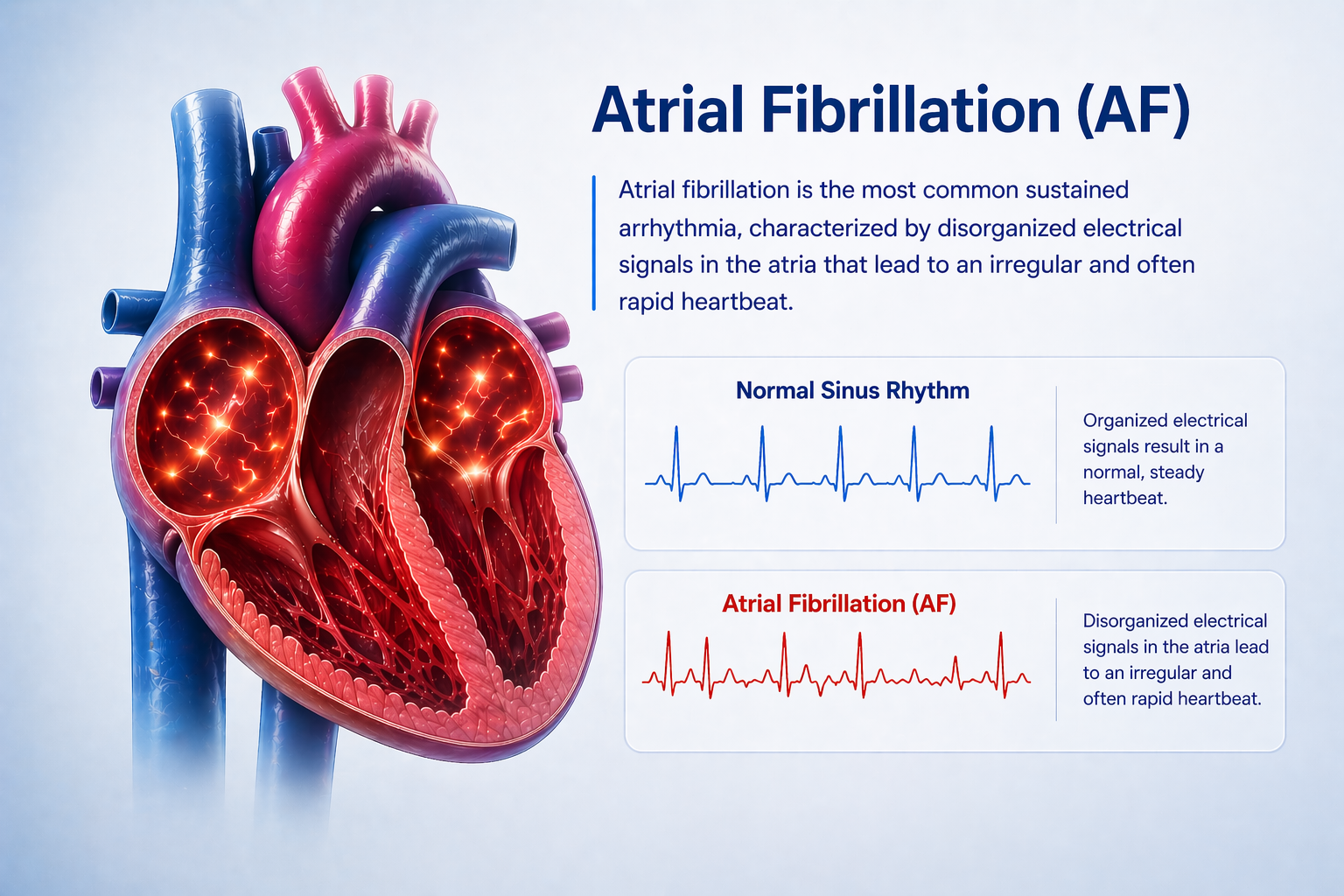
Atrial fibrillation (A-Fib) is the most common heart arrhythmia (irregular heart rhythm) in the world.
- A-Fib affects over 10 million Americans (approximately 5% of the U.S. population), with projections expecting over 12 million people to have A-Fib by 2030
- A-Fib increases the risk of serious complications, including a 500% higher risk of stroke, heart failure, and cognitive decline.
- Chronic, untreated A-Fib significantly impacts daily life by reducing physical stamina and limiting activity due to inefficient cardiac output
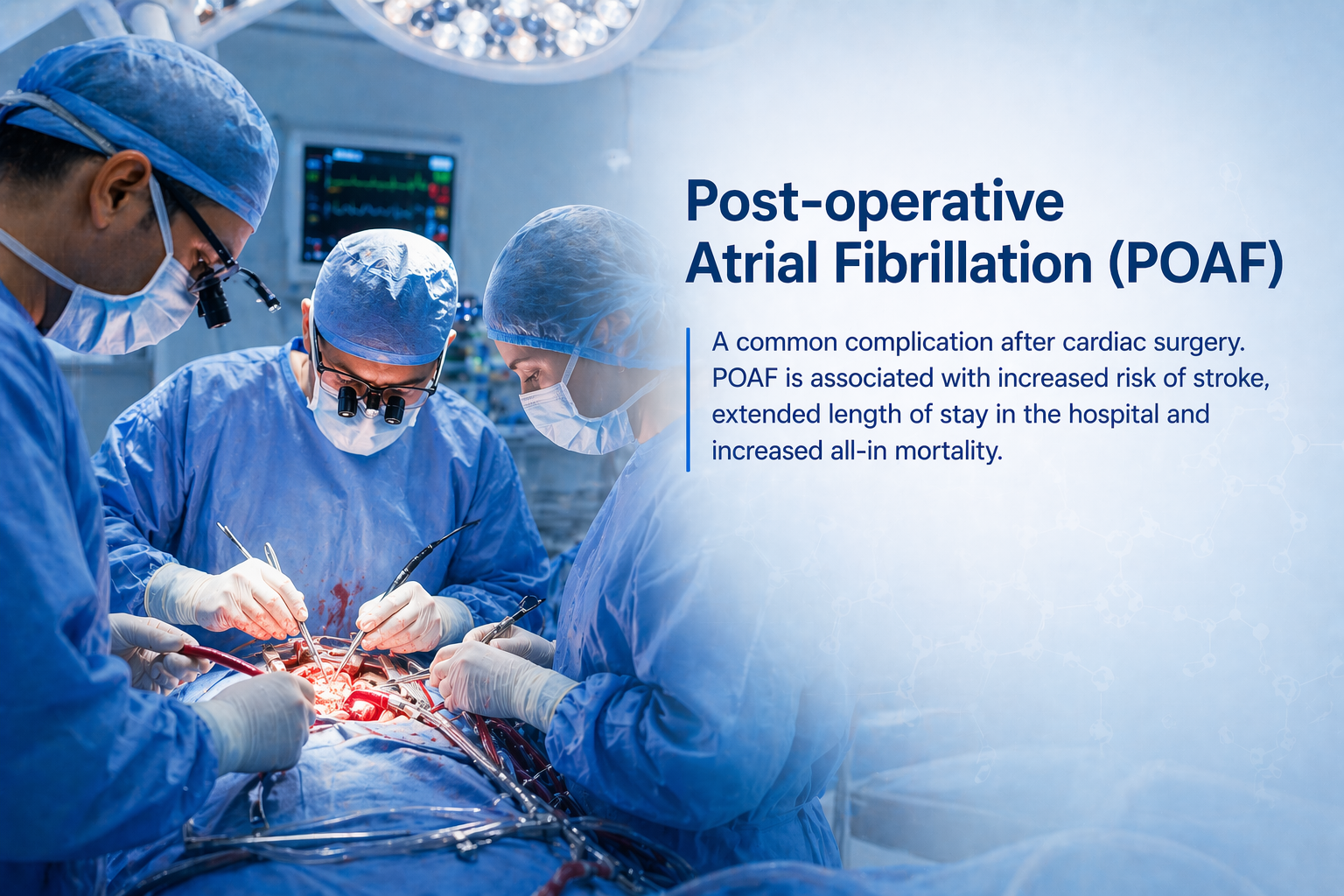
What is Post-Operative Atrial Fibrillation?
Post-operative atrial Fibrillation (POAF) is a common, expensive and potentially morbid complication following cardiac surgery affecting around 35% of the 550,000 cardiac surgeries performed in the U.S. each year.
POAF patients incur on average:
- 12–24 hours of prolonged ICU time
- An additional 2 – 5 days in the hospital
- 2x – 4x increased incidence of stroke and a 2x increase in all-cause 30-day and 6-month mortality
- Significant added costs to hospitals (~$28K in bed cost alone)